
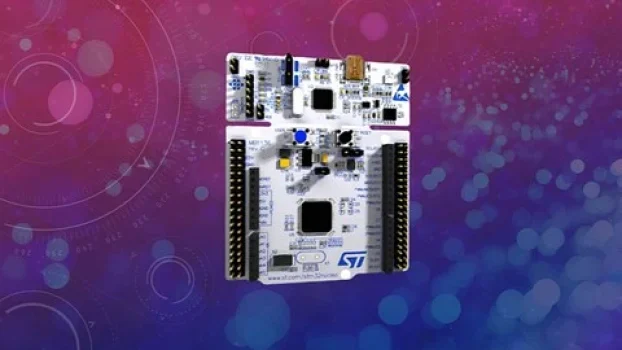
Embedded Driver Development on Microcontrollers: Bare-Metal with Embedded C
Overview
This course is built for engineers who want to understand microcontrollers from the inside out—not through high-level frameworks, but by writing bare-metal drivers from scratch. It focuses on how peripherals actually work at the register level and how reliable drivers are designed, implemented, and debugged in real embedded systems.
Rather than abstract examples, learners work directly with STM32 peripherals, using datasheets and reference manuals the way professional embedded engineers do.
Course Snapshot
- Domain: Embedded systems & microcontroller programming
- Target MCU family: STM32 (ARM Cortex-M based)
- Training provider: FastBit Embedded Brain Academy
- Last updated: January 2026
- Skill level: Intermediate to Advanced
- Duration: ~28.5 hours
- Learning style: Bare-metal, register-level, hands-on
- Certificate: Included
What This Course Is Designed To Do
This course teaches how embedded drivers are actually built, starting from clock configuration and bus architecture, all the way to interrupts and serial communication. It avoids vendor abstraction layers initially so learners can fully understand what happens beneath the APIs.
Key goals include:
- Writing peripheral drivers without external libraries
- Reading and using MCU reference manuals effectively
- Understanding interrupts, clocks, buses, and registers
- Debugging low-level peripheral issues confidently
Skills & Capabilities You’ll Build
Bare-Metal Programming Fundamentals
- Working directly with control, status, and configuration registers
- Understanding MCU memory maps and peripheral address spaces
- Enabling and configuring peripheral clocks correctly
Peripheral Driver Development
- Writing drivers for GPIO, SPI, I2C, and USART
- Designing driver APIs and header files
- Handling peripheral initialization and configuration
- Managing baud rates, serial clocks, and timing
Interrupts & MCU Architecture
- Configuring NVIC and interrupt vectors
- Handling peripheral IRQs correctly
- Understanding vector tables and interrupt priorities

Hardware & Debugging Insight
- Understanding AHB and APB bus architectures
- Working with MCU clock trees (HCLK, PCLK, PLL, etc.)
- Capturing and analyzing serial data with logic analyzers
- Debugging real-world peripheral issues using case studies
Who This Course Is Best For
- Embedded engineers seeking strong low-level fundamentals
- Electronics students learning microcontroller internals
- Developers transitioning from HAL/Arduino to bare-metal
- Firmware engineers working with STM32 MCUs
- Professionals who want deep control over hardware behavior
Frequently Asked Questions
Do I need prior embedded experience?
Basic C programming knowledge is required. MCU basics are helpful.
Is this based on vendor HAL libraries?
No. Drivers are written from scratch to explain core concepts.
Does it cover interrupts and clocks in detail?
Yes. Interrupts, clock trees, and bus systems are covered thoroughly.
Is this useful for real jobs?
Yes. The skills mirror how professional embedded firmware is developed.
Are tools and IDEs updated?
Yes. The course uses updated STM32 development tools.
Practical Value
Many embedded developers use libraries without understanding what happens underneath. This course fills that gap by teaching how drivers actually work, enabling learners to debug, optimize, and design firmware with confidence—especially in constrained or safety-critical systems.
Final Thoughts
If you want to move beyond abstraction layers and gain true embedded systems expertise, this course provides a solid, engineering-focused foundation. It’s especially valuable for those who want to design reliable firmware by understanding hardware behavior at the lowest level.
Affiliate Disclaimer: Some links in this post may be affiliate links. This means we may earn a small commission at no extra cost to you. These commissions help support the site — thank you for your support!