Full-Stack Developer Career Path 2026 – Skills, Roadmap, Courses & Certifications
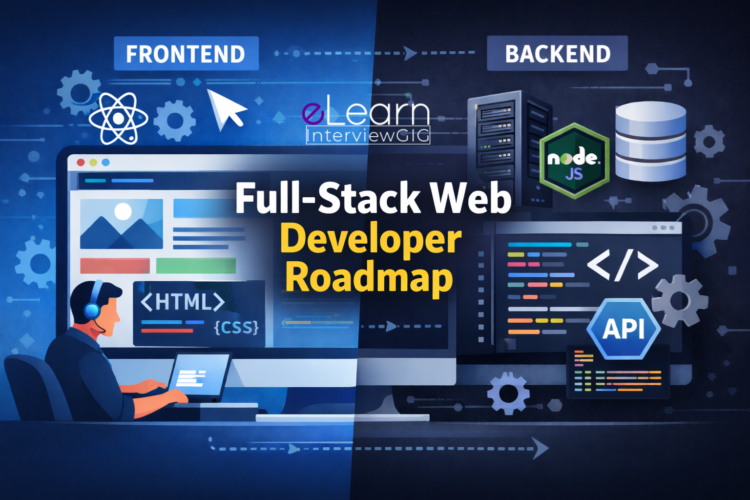
Full-Stack Developer Career Path (2026 Guide)
A Full-Stack Developer is one of the most in-demand tech professionals today because businesses want developers who understand the entire application lifecycle—from designing user interfaces to writing backend logic, managing databases, and deploying applications to the cloud.
In 2026, companies are moving faster than ever. They prefer developers who can build, fix, and improve complete web applications without depending on multiple specialists. This makes full-stack developers highly valuable, well-paid, and suitable for remote jobs, freelancing, and startup environments.
If you are looking for a career with long-term growth, flexibility, and strong demand, full-stack development is one of the safest choices.
Who is a Full-Stack Developer?
So, what exactly does a Full-Stack Developer do on a daily basis?
A Full-Stack Developer is a professional who works on both the client side (frontend) and the server side (backend) of web applications. But the role is more than just knowing two technologies.
A full-stack developer understands:
-
How users interact with a website or application
-
How data is processed, stored, and retrieved from databases
-
How servers, APIs, and authentication systems work
-
How applications are deployed and maintained in real-world environments
In simple terms, a full-stack developer knows how the complete system works from start to finish. This ability allows them to solve problems faster, communicate better with teams, and take ownership of entire features or projects.
That is why full-stack developers often grow into senior engineers, tech leads, or startup founders over time.
Skills Required to Become a Full-Stack Developer
HTML5, CSS3, JavaScript (ES6+), React.js / Next.js, Responsive Design
Node.js / Python / Java, REST APIs, Authentication & Authorization
MySQL / PostgreSQL, MongoDB, Data Modeling
Git & GitHub, Debugging, Problem-Solving
Full-Stack Developer Career Path
This career path explains what to learn, why it matters, and what companies expect at each step.
It is written for beginners and early professionals, not for marketing.
Step 1: Learn Programming Basics (Foundation Stage)
This step is about understanding how the web works, not building applications yet.
What You Learn
-
HTML – structure of web pages
-
CSS – layout, responsiveness, and styling
-
JavaScript – logic, events, and basic interactivity
What This Step Actually Teaches You
-
how browsers render content
-
how user actions trigger logic
-
how data flows from UI to code
Common Tools
-
Code Editor: VS Code
-
Browser DevTools
-
Basic Git usage
When You’re Ready to Move On
You can:
-
build static pages confidently
-
write basic JavaScript without copying
-
understand errors in browser console
Step 2: Choose a Frontend Framework (UI Engineering)
This step is about managing complexity, not learning new syntax.
Why Frameworks Are Needed
As applications grow, plain JavaScript becomes hard to manage. Frameworks help you:
-
organize UI logic
-
reuse components
-
manage state
Common Choices
-
React.js – component-based UI development
-
Next.js – React with routing, SSR, performance optimizations
Tools & Libraries Used
-
npm / yarn
-
Component libraries
-
Basic routing
-
State handling
What Companies Expect Here
-
understanding of components and props
-
ability to fetch data from APIs
-
basic state management
Not expected:
-
advanced performance tuning
-
complex animations
Step 3: Learn Backend Development (Server-Side Logic)
This step turns your frontend into a real application.
What Backend Development Means
-
handling requests from frontend
-
processing data
-
applying business rules
-
sending responses
Common Backend Options
-
Node.js + Express
-
Python frameworks (Flask, Django, FastAPI)
Key Concepts (More Important Than Tools)
-
request/response cycle
-
REST APIs
-
authentication basics
-
error handling
Tools Used
-
Postman / API testing tools
-
Backend frameworks
-
Environment variables
Readiness Check
You should be able to:
-
build a simple API
-
connect frontend to backend
-
handle basic errors
Step 4: Work With Databases (Data Layer)
Applications are useless without stored data.
This step teaches data persistence and structure.
What You Learn
-
how data is stored
-
how applications read/write data
-
how to design basic schemas
Database Types
-
SQL databases – structured data
-
NoSQL databases – flexible data models
Tools & Technologies
-
MySQL / PostgreSQL
-
MongoDB
-
ORMs / query builders
What Matters Most
-
understanding relationships
-
writing clean queries
-
avoiding data duplication
Companies care more about correct data handling than advanced queries.
Step 5: Build Real-World Projects (Proof of Skill)
This step converts learning into employable evidence.
Why Projects Matter
Projects show:
-
problem-solving ability
-
understanding of full application flow
-
ability to finish what you start
Common Project Types
-
E-commerce website – auth, payments, data flow
-
Job portal – forms, filters, dashboards
-
Admin dashboard – role-based access
-
SaaS application – APIs, UI, database
What Companies Look For
-
working features
-
readable code
-
clear structure
Not required:
-
perfect UI
-
complex architecture
Step 6: Deployment & Cloud Basics (Production Awareness)
This step teaches how applications run in the real world.
What Deployment Means
-
making your app accessible online
-
configuring environments
-
handling basic server setup
Tools Commonly Used
-
Hosting platforms
-
Git-based deployment
-
Environment configuration
-
Basic CI/CD awareness
DevOps (Basic Level Only)
-
application build process
-
environment variables
-
logs and monitoring (basic)
Companies do not expect deep DevOps skills from juniors — only awareness.
What This Career Path Achieves
By completing these steps, you gain:
-
end-to-end understanding of applications
-
ability to work in teams
-
readiness for real job environments
This structure also allows:
-
specialization later (frontend / backend)
-
smoother career growth
Tools & Technologies Used
- React
- Node.js
- MongoDB
- MySQL
- GitHub
- AWS & Azure
Courses & Certifications
Beginner Level
Intermediate Level
Advanced Level
- MERN Stack Development
- Cloud Deployment & DevOps Basics
Read More:Python Developer Roadmap 2026: Skills, Tools, Frameworks & Career Guide
Recommended Courses & Certifications for Full-Stack Developers
(For building real projects and job readiness)
1.The Complete Full-Stack Web Development Bootcamp ⭐⭐⭐⭐⭐(Most Popular)
Instructor: Angela Yu | Duration: 61 hours| Level: Beginner to Advanced
Key Highlights:
- Learn HTML, CSS, JavaScript, React, Node.js, PostgreSQL
- Build 16 real-world projects for your portfolio
- Covers full-stack development + basic Web3 concepts
- Ideal for beginners, freshers, and career switchers
Best for: Students aiming for junior full-stack or freelance roles
2. The Web Developer Bootcamp 2026
Instructor: Colt Steele | Duration: 73.5 hours| Level: Beginner to Advanced
What you’ll learn:
HTML, CSS, JavaScript, React, Node.js, Express, MongoDB, Authentication, Deployment
Best for: Beginners to job-ready developers
3. Complete web development course
Instructor: Not specified | Duration: 100 hours | Level: Beginner to Advanced
Key Highlights:
- Covers HTML, CSS, Tailwind, JavaScript, React, Node.js
- Full-stack development with MERN stack
- Includes MongoDB, Prisma, Git, and deployment
- Suitable for company projects and freelance work
Best for: Learners who want one complete course for full-stack development
4. Meta Full Stack Developer: Front-End & Back-End from Scratch Specialization
Instructor: Meta Staff | Duration: ~8 months (10 hrs/week) | Level: Beginner
Key Highlights:
- Learn full-stack web development from scratch
- Covers HTML, CSS, JavaScript, React, Python, and Django
- Build end-to-end web applications with databases and authentication
- Industry-designed curriculum by Meta
Best for: Beginners who want structured, certification-based full-stack learning
5. IBM Full Stack Software Developer Professional Certificate⭐⭐⭐⭐⭐(Most Popular)
Instructor: IBM Skills Network Team | Duration: ~5 months (10 hrs/week) | Level: Beginner
Key Highlights:
- Learn HTML, CSS, JavaScript, React, Node.js, Python, and Django
- Cloud-native development with containers, Kubernetes, and microservices
- Build hands-on projects and a GitHub portfolio (capstone included)
- Industry-recognized credential from IBM with AI & cloud skills
Best for: Beginners seeking job-ready full-stack + cloud skills with certification
6. Full-Stack Web Development Specialization
Instructor: Dr. Matthew Yee-King | Duration: ~12 weeks (3 hrs/week) | Level: Beginner
Key Highlights:
- Learn semantic and accessible HTML for modern web pages
- Design responsive and dynamic layouts using CSS
- Use JavaScript to retrieve and present data dynamically
- Strong focus on web fundamentals and usability
Best for: Beginners who want a solid foundation in web development concepts
7. Microsoft Full-Stack Developer Professional Certificate
Instructor: Microsoft | Duration: ~9 months (10 hrs/week) | Level: Beginner
Key Highlights:
- Learn full-stack development using .NET Core and C#
- Apply object-oriented programming (OOP) in real projects
- Implement CI/CD practices for automated deployment
- Build scalable, secure, and performance-focused applications
Best for: Beginners who want enterprise-level full-stack skills with a Microsoft credential
8. Full Stack Web Development en Español Specialization
Instructor: Ezequiel Lamónica | Duration: ~2 months (10 hrs/week) | Level: Beginner
Language: Spanish
Key Highlights:
- Build client-side web pages using HTML, CSS, and Bootstrap
- Develop Single Page Applications (SPA) with Angular
- Create server-side support and full-stack applications
- Learn mobile app development with NativeScript
Best for: Spanish-speaking beginners who want full-stack and mobile development skills
9. Amazon Junior Software Developer Professional Certificate⭐⭐⭐⭐⭐(Special Mention)
Instructor: Amazon | Duration: ~4 months (10 hrs/week) | Level: Beginner
Key Highlights:
- Core software development concepts: SDLC, OOP, and programming fundamentals
- Programming with Java, data structures, algorithms, and SQL
- Full-stack web development concepts and backend application building
- Hands-on real-world projects + final capstone project
- Introduction to Generative AI in software development
Best for: Beginners who want a direct entry into Junior Software / Full-Stack Developer roles
10.NET Full-Stack Developer Specialization
Instructor: Board Infinity | Duration: ~12 weeks (5 hrs/week) | Level: Intermediate
Key Highlights:
- Build full-stack web applications using .NET Core
- Frontend development with HTML, CSS, JavaScript, and React
- Backend development using ASP.NET Core, MVC, and RESTful APIs
- Focus on scalable, enterprise-ready application design
Best for: Developers who want to build full-stack applications using .NET technologies
Why this course is specially recommended
- Built specifically for Junior Software Developer job roles
- Strong focus on practical, portfolio-ready projects
- Covers both software engineering + full-stack fundamentals
- Employer-recognized certificate from Amazon
What Companies Actually Expect From Full-Stack Developers
This section matters more than any roadmap.
What Companies DO Expect
-
ability to understand existing code
-
basic debugging skills
-
clear communication with teammates
-
understanding of how frontend and backend interact
-
willingness to learn on the job
What Companies Do NOT Expect
-
mastery of every framework
-
perfect system design as a fresher
-
knowing all tools listed in job descriptions
-
building everything from scratch
Job descriptions list wish-lists, not minimum requirements.
Why Many Candidates Get Rejected
Common reasons include:
-
copying projects without understanding
-
inability to explain design choices
-
weak fundamentals despite many certificates
-
jumping between stacks without depth
Rejections are usually skill clarity issues, not intelligence issues.
Job Roles & Opportunities
- Full-Stack Developer
- Web Developer
- Software Engineer
- Backend Developer
- Frontend Developer
Frequently Asked Questions
Is Full-Stack Development good for beginners?
Yes, but beginners should learn step-by-step, not everything at once. Starting with one side first leads to better results.
Do companies really hire fresh Full-Stack Developers?
Yes. Companies hire candidates who show:
-
basic end-to-end understanding
-
ability to learn
-
clean and readable code
Titles matter less than skills.
Is it better to be frontend or backend first?
Either is fine. What matters is:
-
depth in one area
-
basic understanding of the other
-
ability to connect both sides
Are projects more important than certificates?
Yes. Certificates help visibility, but projects show capability. Employers trust demonstrated work more than course completion.
When should I start applying for jobs?
Start applying when:
-
you can explain your own code
-
you understand basic application flow
-
you can fix simple bugs without tutorials
You do not need to know everything.
Salary & Career Growth (India + Global)
| Level | Experience | Average Salary |
|---|---|---|
| Junior | 0–2 years | ₹4–8 LPA |
| Mid | 2–5 years | ₹10–18 LPA |
| Senior | 5+ years | ₹20–35+ LPA |
| Remote (Global) | — | $60k–120k |
Is Full-Stack Developer a Good Career in 2026?
Yes, Full-Stack Development is a very good career choice in 2026 and beyond. Companies are increasingly looking for developers who can handle both frontend and backend work, making full-stack professionals more valuable and versatile.
Here’s why this career continues to grow:
- High demand across industries
Almost every industry—IT, startups, e-commerce, fintech, healthcare, and edtech—needs full-stack developers to build and maintain web applications. - Remote & freelance opportunities
Full-stack developers can easily work as remote employees or freelancers, as their skills are suitable for global projects and startups worldwide. - Works well with AI tools
AI tools help full-stack developers code faster and smarter, but they don’t replace them. Developers who understand the full system can use AI to boost productivity. - Faster career growth
Since full-stack developers understand complete application architecture, they often grow faster into senior roles, tech leads, or architects. - Startup-friendly skillset
Startups prefer full-stack developers because one person can manage multiple parts of a product, reducing cost and increasing speed.
Read More: Data Analyst Career Path 2026 – Skills, Roadmap & Courses