Cloud Engineer Reality Check: What It Really Takes to Get Hired in 2026
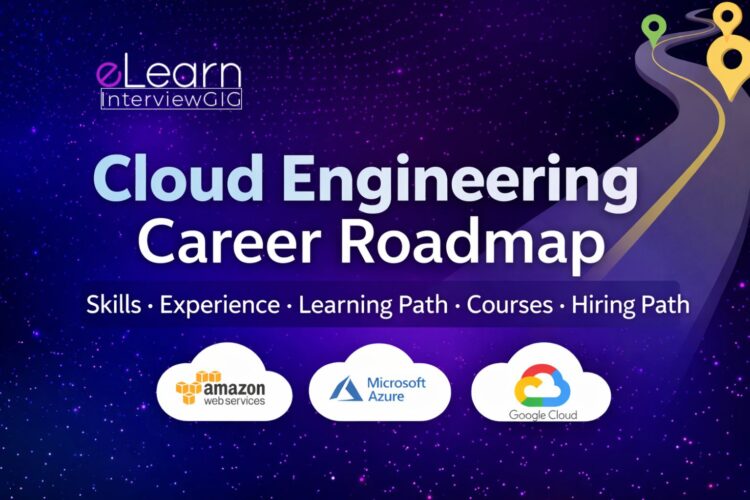
Cloud Engineer Reality Check: What Companies Actually Hire For in 2026
For the last few years, the internet has been flooded with promises like “Become a Cloud Engineer in 6 months” or “No IT background required”. These posts get clicks, but they do not reflect how cloud engineering works in real companies.
This article is not written to sell a course or certifications. It is written based on real job descriptions, real hiring decisions, and real-world cloud teams. If you are serious about a cloud career, this is the version of the truth you need.
Cloud Engineering Is Not an Entry-Level Role
A cloud engineer is not a beginner IT position. In most organizations, cloud engineers are responsible for production infrastructure, customer data, uptime, security, and cost control. These are not responsibilities given to someone with no prior IT exposure.
Cloud engineering evolved from traditional system administration and infrastructure engineering. The difference is not what you manage, but how you manage it.
Instead of:
- Physical servers
- On‑prem networking
- Manual provisioning
You now manage:
- Virtual infrastructure
- Software-defined networking
- Automated deployments
The complexity did not disappear. It increased.
What a Cloud Engineer Actually Does
Despite the single job title, cloud engineering is a multi‑discipline role. In real jobs, cloud engineers are expected to combine skills from several domains.
A cloud engineer typically works across:
- Systems engineering – Linux administration, patching, scaling, performance tuning
- Networking – VPC design, routing, DNS, load balancers, firewalls
- Security – IAM, secrets management, least privilege, compliance
- Automation – infrastructure as code, CI/CD pipelines, scripting
- Operations – monitoring, alerting, incident response, on-call rotations
- Cost management – resource optimization, budgeting, usage analysis
This is why companies rarely trust cloud infrastructure to someone without prior operational experience.
How Most Cloud Engineers Actually Get Hired
Based on real hiring patterns and job descriptions, most cloud engineers come from one of these paths:
- Helpdesk → Sysadmin → Cloud
- Backend Developer → Cloud / DevOps
- Network or Security Engineer → Cloud
- Internal IT roles supporting cloud migration projects
These roles build the foundation that cloud engineering requires: troubleshooting, accountability, and production responsibility.
Someone with this background understands why systems fail, not just how to deploy them.
Certifications: Helpful but Not Enough
Cloud certifications are not useless, but they are widely misunderstood.
Certifications help with:
- Resume screening
- Learning service terminology
- Understanding cloud concepts
Certifications do not prove:
- Real troubleshooting ability
- Incident handling experience
- Cost control awareness
- Security judgment
Many hiring managers now treat certifications as baseline knowledge, not proof of readiness. Candidates with multiple certifications but no hands-on projects often struggle in interviews.
What Hiring Managers Really Look For
After reviewing modern job descriptions across startups and enterprises, the expectations are clear.
1. Real Projects, Not Just Labs
Companies want to see:
- A working application deployed in the cloud
- Infrastructure created using automation
- Clear explanation of architectural decisions
Hiring managers care less about which services you used and more about why you chose them.
2. Infrastructure as Code
Manual console setup does not scale.
Most companies expect experience with infrastructure as code tools and version control. Being able to read, write, and review infrastructure changes is considered a core skill, not an advanced one.
3. Cost Awareness
Cloud cost overruns are a major business problem.
Engineers who understand:
- Right‑sizing resources
- Auto‑scaling strategies
- Cost monitoring
are significantly more valuable than engineers who simply deploy services.
4. Operational Responsibility
Cloud engineers are often part of:
- On‑call rotations
- Incident response teams
- Disaster recovery planning
This is not a purely design-focused role. Operations matter.
Cloud Engineering Is Not One Job
The title “Cloud Engineer” often hides multiple roles, such as:
- Cloud Infrastructure Engineer
- DevOps Engineer
- Platform Engineer
- Site Reliability Engineer
- Cloud Security Engineer
- FinOps Engineer
Different companies use the same title for very different responsibilities. Always read the job description carefully.
How AI Is Changing Cloud Engineering
AI tools are already influencing cloud work, but they are not replacing cloud engineers.
AI is effective at:
- Generating boilerplate infrastructure code
- Suggesting configurations
- Summarizing logs and alerts
- Highlighting cost anomalies
AI cannot replace:
- Architectural decision-making
- Security trade-offs
- Incident leadership
- Understanding business impact
Future cloud engineers will be expected to use AI tools, but also to validate and correct them. Blind trust in automation is a risk, not a skill.
The Realistic Timeline
If you are starting with zero IT background:
- Learning basics and cloud concepts: 6–9 months
- Gaining operational experience: 1–2 years
- Becoming competitive for cloud roles: 2–4 years
Some people move faster, but most successful cloud engineers follow this progression.
A Clear, Realistic Cloud Engineer Roadmap
This roadmap reflects how people actually get hired, not how courses are marketed. Timelines vary, but the sequence matters.
Phase 1: Core IT Foundations (0–6 Months)
Before cloud, you must understand how systems work.
Focus on:
- Linux fundamentals (filesystems, processes, permissions)
- Basic networking (IP, DNS, ports, routing)
- How servers fail and recover
- Troubleshooting mindset
At this stage, certifications are optional. Hands-on learning matters more than exams.
Phase 2: Entry-Level IT or Engineering Exposure (6–18 Months)
Most successful cloud engineers gain real-world exposure through:
- Helpdesk or IT support roles
- Junior system administrator roles
- Backend development or DevOps-adjacent work
Key goals:
- Handle real incidents
- Learn responsibility and escalation
- Support production systems
This phase builds intuition that cloud tools alone cannot teach.
Phase 3: Cloud Fundamentals + Projects (12–24 Months)
Now cloud concepts start making sense.
Focus on:
- One cloud platform deeply
- Compute, storage, networking, IAM
- Deploying real applications
- Monitoring and logging
Build projects that show:
- A working system
- Clear architecture decisions
- Failure handling and recovery
Avoid shallow “Hello World” labs. Depth matters.
Phase 4: Automation & Infrastructure as Code (18–30 Months)
This is where engineers separate from beginners.
Learn:
- Infrastructure as Code
- Version control and code reviews
- CI/CD basics
- Environment consistency (dev, test, prod)
Manual console work should be the exception, not the default.
Phase 5: Production Readiness & Cost Awareness (24–36 Months)
At this level, companies start trusting you with real responsibility.
You should understand:
- On-call practices
- Incident response
- Disaster recovery
- Cost optimization strategies
- Security trade-offs
This is where most engineers become truly employable as cloud engineers.
Phase 6: Specialization & Growth (36+ Months)
After becoming a solid cloud engineer, specialization accelerates growth.
Possible directions:
- Platform Engineering
- Site Reliability Engineering
- Cloud Security
- FinOps
- Architecture roles
Specialization comes after foundations, not before.
Recommended Courses & Certifications
Below are commonly trusted course and certification titles referenced across job descriptions and real hiring discussions. These are not mandatory, but they align well with each stage of the roadmap. Course names are mentioned for guidance only — skills matter more than certificates.
Foundation Level (IT & Systems Basics)
Courses (Udemy / Coursera):
- Linux Administration Bootcamp
- Linux Command Line Essentials
- Computer Networking Fundamentals
- Networking Basics for IT Support
- Introduction to Operating Systems
Certifications (Optional):
System Administration & Early Infrastructure
Courses:
- Linux System Administration (Beginner to Advanced)
- Shell Scripting for System Administrators
- Windows Server Administration Fundamentals
- IT Troubleshooting and Incident Management
Certifications:
Cloud Fundamentals
Courses:
- Cloud Computing Fundamentals
- AWS Cloud Practitioner Essentials
- Microsoft Azure Fundamentals
- Google Cloud Fundamentals: Core Infrastructure
Certifications:
Associate Cloud & Infrastructure Level
Courses:
- AWS Solutions Architect Associate Training
- Microsoft Azure Administrator Training
- Google Associate Cloud Engineer Training
- Cloud Networking Deep Dive
Certifications:
- AWS Certified Solutions Architect – Associate
- AWS Certified SysOps Administrator – Associate
- Microsoft Azure Administrator Associate (AZ‑104)
- Google Associate Cloud Engineer
Automation, DevOps & Infrastructure as Code
Courses:
- Infrastructure as Code with Terraform
- DevOps Fundamentals
- CI/CD Pipelines with Git and Jenkins
- Git for DevOps Engineers
- Cloud Automation with Python
Certifications (Optional):
- HashiCorp Certified: Terraform Associate
- AWS DevOps Engineer – Professional
Security, Reliability & Cost Optimization
Courses:
- Cloud Security Fundamentals
- Identity and Access Management (IAM) in the Cloud
- Site Reliability Engineering Basics
- Cloud Cost Optimization and FinOps
Certifications:
Advanced & Architecture Level
Courses:
- Cloud Architecture Design Patterns
- Distributed Systems Design
- High Availability and Disaster Recovery in Cloud
- Platform Engineering Fundamentals
Certifications:
- AWS Solutions Architect – Professional
- Google Professional Cloud Architect
- Microsoft Azure Solutions Architect Expert
Important Note: Certifications help with resume screening, but hiring decisions are driven by hands-on experience, real projects, and the ability to explain design choices clearly.
Cloud engineering is a high-responsibility career built on strong fundamentals. It is not an overnight transition, and it is not a shortcut role.
If you focus on:
- Strong system fundamentals
- Real-world projects
- Operational thinking
- Cost and security awareness
you will be far more competitive than someone chasing titles and certifications alone.
The cloud rewards engineers who understand systems deeply, not those who rush the journey.
FAQ’S
Is cloud engineering harder than DevOps?
Cloud engineering and DevOps overlap, but cloud engineering focuses more on infrastructure reliability, security, and cost control. DevOps emphasizes delivery speed and automation.
Why do companies prefer experienced cloud engineers?
Because cloud engineers manage production systems. Mistakes can cause downtime, security breaches, or large cloud bills. Experience reduces risk.
Can backend developers transition into cloud engineering?
Yes. Backend developers with strong system design and deployment experience often transition successfully into cloud or platform engineering roles.
Do cloud engineers need deep networking knowledge?
Yes. Virtual networking, routing, DNS, and load balancing are core cloud concepts. Weak networking knowledge is a common reason candidates fail interviews.
What mistakes do beginners make in cloud careers?
Common mistakes include relying only on certifications, skipping system fundamentals, ignoring cost optimization, and avoiding operational responsibility.
Is on-call mandatory for cloud engineers?
In many companies, yes. Cloud engineers are often part of incident response and reliability teams, especially in production environments.
Are cloud engineer salaries high because the role is difficult?
Yes. Compensation reflects responsibility, system complexity, and business risk. Cloud engineers are trusted with critical infrastructure.
Does learning multiple cloud platforms help early?
Not initially. Employers prefer depth in one platform over shallow knowledge of many. Multi-cloud skills come later.
What soft skills matter for cloud engineers?
Clear communication, incident coordination, documentation, and explaining technical trade-offs to non-technical teams are highly valued.
What will differentiate cloud engineers in the AI era?
Engineers who can combine system knowledge, cost awareness, security thinking, and AI-assisted automation will stand out.
If you want to build a long-term career in cloud engineering, build foundations first. The rest follows naturally.
Affiliate Disclaimer: Some links in this post may be affiliate links. This means we may earn a small commission at no extra cost to you. These commissions help support the site — thank you for your support!