Complete AI Engineer Guide for Beginners to Advanced (Skills, Courses, Salary & FAQs)
Artificial Intelligence is no longer the future. it is the present. From recommendation systems to self-driving cars, AI Engineers are building the intelligence behind modern technology.
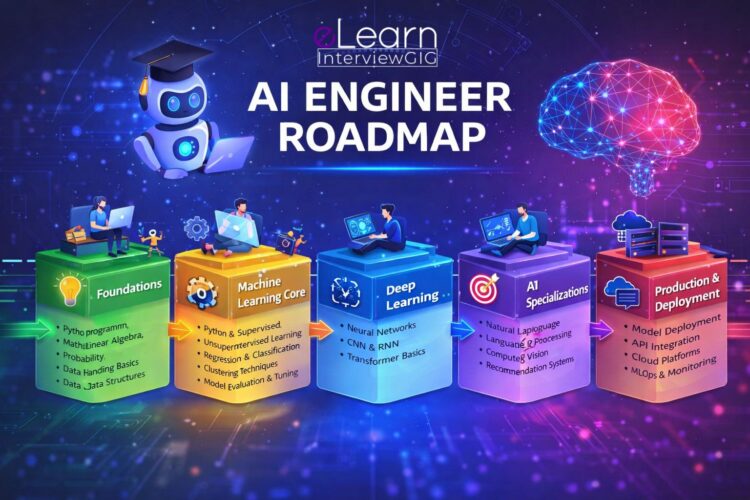
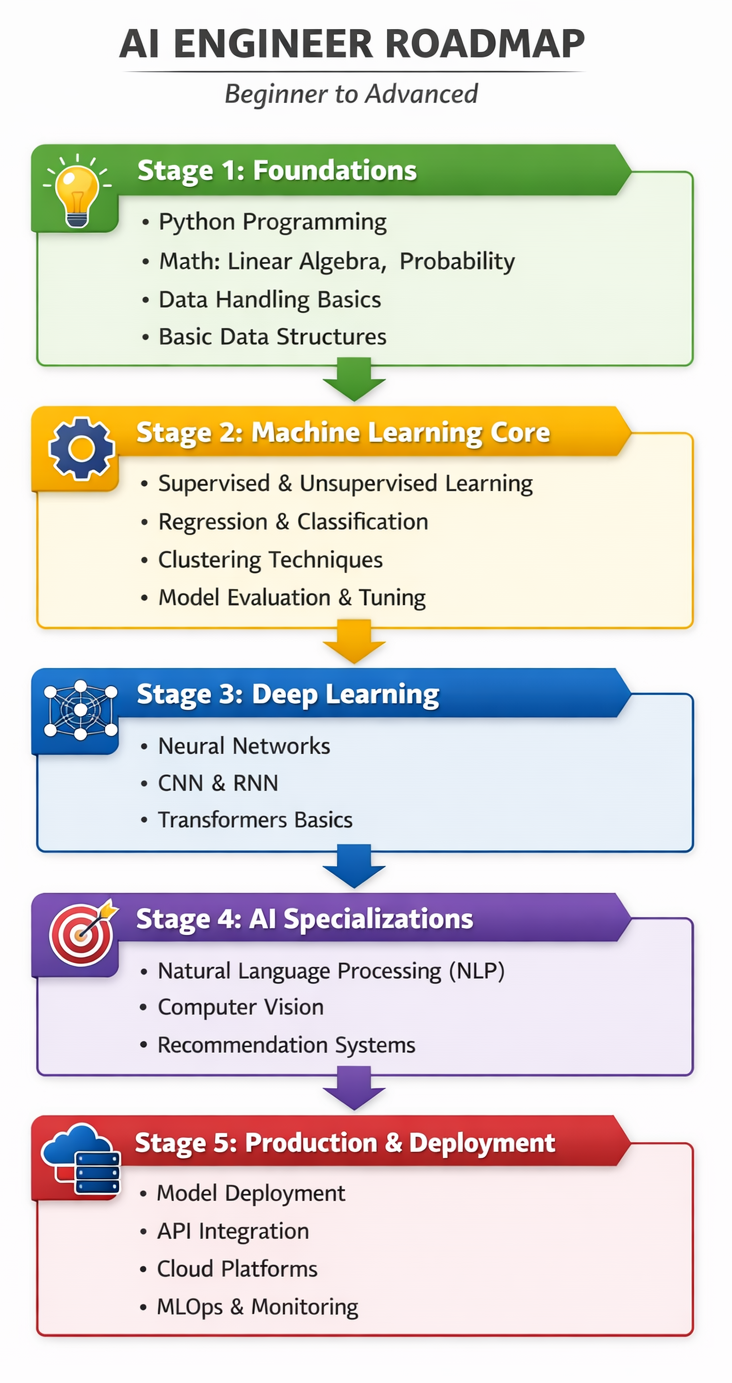
This guide explains how to become an AI Engineer from scratch, using a clear learning path, real skills, trusted tools, and job-ready preparation, suitable for students, freshers, working professionals, and career switchers.
What Is an AI Engineer?
An AI Engineer designs, builds, trains, and deploys intelligent systems that can learn from data and make decisions.
Unlike a Data Analyst (who focuses on insights), an AI Engineer focuses on models + automation + production systems.
One strong project + one trusted certification is better than many unfinished courses.
AI Engineer Job Roles
After completing the roadmap, you can apply for:
AI Engineer
Machine Learning Engineer
Deep Learning Engineer
NLP Engineer
Computer Vision Engineer
FAQs – AI Engineer Career
Q1. Is AI Engineer good for beginners?
Yes. With structured learning, beginners can become job-ready in 8–12 months.
Q2. Do I need coding experience?
Basic Python is enough to start.
Q3. Is AI Engineer future-proof?
Yes. AI skills will remain in demand for at least the next decade.
Q4. Is a degree mandatory?
No. Skills + projects + certifications matter more.
Q5. Can Data Analysts move to AI Engineer?
Absolutely. It’s one of the best upgrade paths.
Final Words
AI Engineer is not just a trending job title — it is a long-term, future-safe profession that sits at the core of how modern technology is built. From healthcare and finance to e-commerce and automation, AI Engineers are the people turning data into real, intelligent systems.
You don’t need to be perfect at math or come from a computer science background to start. What truly matters is a clear roadmap, disciplined learning, hands-on projects, and continuous improvement. Even one well-built AI project can create more impact than multiple certificates without practice.
To stand out in the job market, combine practical learning with recognized certifications from trusted platforms like Coursera, Udemy, and DeepLearning.AI. Choose courses that focus on real-world projects, model building, and deployment, not just theory.
AI is evolving fast, and so should you. Start small, stay consistent, build real solutions, and keep upgrading your skills. With the right approach, any motivated learner can become an AI Engineer and build a strong, future-ready career.
Affiliate Disclaimer: Some links in this post may be affiliate links. This means we may earn a small commission at no extra cost to you. These commissions help support the site — thank you for your support!