Data Analyst Career Path 2026 – Skills, Roadmap & Courses
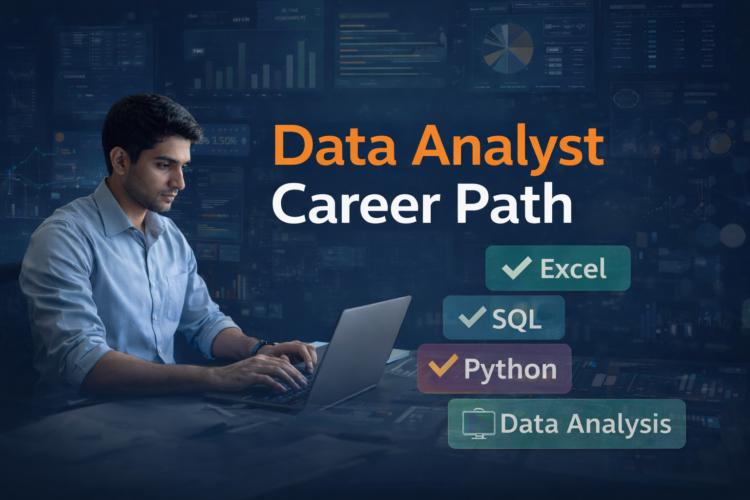
Data Analyst Career Path (2026 Guide)
Data Analyst is one of the most stable and in-demand tech careers today. Every company from startups to global enterprises relies on data analysts to turn raw data into meaningful insights that drive decisions.
If you enjoy working with numbers, patterns, dashboards, and business problems, this role offers strong job security, global demand, and long-term growth.
This guide explains what a Data Analyst really does, the skills you need, a clear learning path, and recommended courses to start or switch into this career.
What Does a Data Analyst Do?
A Data Analyst collects, cleans, analyzes, and interprets data to help organizations make informed decisions.
Daily responsibilities typically include:
- Analyzing business data from databases and spreadsheets
- Creating reports, dashboards, and visualizations
- Identifying trends, patterns, and performance issues
- Supporting business teams with data-driven insights
- Presenting findings to managers and stakeholders
A Data Analyst does not just work with numbers they translate data into business value.
Why Choose Data Analyst as a Career?
Data Analytics remains future-proof because data is growing every year, not shrinking.
Key advantages:
- High demand across industries (IT, finance, healthcare, marketing, e-commerce)
- Strong salary growth with experience
- No strict degree requirement (skills matter more)
- Suitable for freshers and career switchers
- Works well as a foundation for AI, ML, and Business Analytics roles
Skills Required to Become a Data Analyst
You don’t need to learn everything at once. Focus on core skills first, then advance gradually.
1. Data Analysis Fundamentals
- Understanding data types (structured & unstructured)
- Data cleaning and preparation
- Basic statistics (mean, median, trends, distributions)
2. Excel / Spreadsheet Skills
- Formulas (VLOOKUP/XLOOKUP, IF, COUNT, SUMIFS)
- Pivot tables
- Charts and dashboards
3. SQL (Very Important)
- SELECT, WHERE, JOIN, GROUP BY
- Subqueries and basic optimization
- Extracting data from relational databases
4. Programming (Beginner Level)
- Python (Pandas, NumPy)
- Data manipulation and analysis scripts
- Automating repetitive data tasks
5. Data Visualization Tools
- Power BI or Tableau
- Creating interactive dashboards
- Storytelling with data
6. Business & Communication Skills
- Understanding business problems
- Explaining insights clearly
- Writing simple, actionable reports
Data Analyst Learning Path (Step-by-Step)
Follow this order to avoid confusion and wasted time:
Step 1: Learn Excel & Data Basics
Start with spreadsheets, formulas, and basic statistics.
Step 2: Master SQL
This is mandatory for almost all data analyst jobs.
Step 3: Learn Data Visualization
Choose Power BI or Tableau and practice dashboards.
Step 4: Add Python for Data Analysis
Learn Python only for data tasks — not full software development.
Step 5: Work on Real Projects
- Sales analysis
- Customer behavior analysis
- Marketing performance dashboards
Projects matter more than certificates.
Recommended Data Analyst Courses (Beginner to Job-Ready)
Course 1: IBM Data Analyst Professional Certificate
Beginner-friendly program designed to help learners build core data analyst skills through practical exercises and projects. No prior experience is required.
What you’ll learn in this program:
- Data analysis fundamentals
- SQL and data querying
- Python for data analysis
- Data visualization and dashboards
Course 2: Meta Data Analyst Professional Certificate
Beginner-friendly program designed to help learners start a career in data analytics by building practical, job-ready skills. No degree or prior experience is required.
Covers:
- Data collection, cleaning, and analysis
- Data visualization and reporting
- Statistical analysis and decision-making
- Structured data analysis workflow
Course 3: Generative AI Data Analyst Specialization
Beginner-level program focused on using generative AI tools to support data analysis tasks, automate workflows, and improve data-driven communication.
Covers:
- Using generative AI tools for data analysis
- Cleaning and analyzing data with AI assistance
- Automating repetitive data workflows
- Writing effective prompts for data analysis tasks
Course 4: Microsoft Power BI Data Analyst Professional Certificate
Beginner-friendly program focused on building practical skills for working with data using Microsoft Power BI. Suitable for learners who want to specialize in data visualization and reporting.
Covers:
- Preparing and transforming data for analysis
- Using Power BI for reports and dashboards
- Working with Excel data in Power BI
- Applying skills through practical projects
Course 5: Google Data Analytics Professional Certificate
Beginner-friendly certificate program designed to help learners build core data analytics skills used in entry-level data analyst roles. No prior degree or experience is required.
Covers:
- Data cleaning, analysis, and visualization
- Spreadsheets, SQL, and Python basics
- Tableau and dashboard creation
- Presenting insights using data
Course 6: Complete Data Analyst Bootcamp: From Basics to Advanced
Comprehensive Udemy bootcamp designed for learners who want in-depth, end-to-end data analytics skills covering both foundational and advanced topics.
Instructor: Krish Naik
Duration: 89+ hours of on-demand video
Covers:
- Data analysis with Python and core libraries
- SQL for data querying and database handling
- Exploratory Data Analysis (EDA) and visualization
- Power BI dashboards and reporting
- Excel, ETL concepts, and modern data workflows
Course 7: Data Analytics Career Path: 72-Day Data Analyst Bootcamp
Structured Udemy bootcamp designed to build practical data analytics skills across multiple tools, covering both fundamentals and applied use cases.
Instructor: Shahriar’s Sight Academy
Duration: 34+ hours of on-demand video
Covers:
- Excel for data cleaning, analysis, and dashboards
- MySQL and database fundamentals
- Python for data analysis and visualization
- Power BI for reporting and insights
- Using ChatGPT to support data analysis workflows
Course Selection & Certification Note
The courses listed above are carefully selected beginner-friendly programs that align with the skills and learning path required for a Data Analyst role. These courses focus on practical knowledge, real tools, and structured learning rather than theory alone.
Most of these courses offer a certificate of completion after successful enrollment and course completion. Certificate availability, duration, pricing, and access terms may vary depending on the platform and instructor.
Some courses are paid programs. Always review the official course page to check:
- Certificate details
- Course content and updates
- Pricing and refund policies
- Instructor information
Choose the course that best matches your current skill level, learning style, and career goals.
Tools Used by Data Analysts
Most companies expect familiarity with these tools:
- Microsoft Excel / Google Sheets
- SQL (MySQL, PostgreSQL, SQL Server)
- Power BI or Tableau
- Python (Pandas, NumPy, Matplotlib)
- Google Analytics (basic level)
You don’t need to master all tools at once.
Data Analyst Salary & Job Outlook (2026)
In India (Approximate):
- Fresher: ₹4–7 LPA
- 2–4 Years Experience: ₹8–14 LPA
- Senior Analyst: ₹15+ LPA
In Global:
-
Strong demand in US, Europe, Middle East, and remote roles
-
Growing need in non-tech industries as well
Who Should Choose This Career?
Data Analyst is ideal if you:
- Like working with data and numbers
- Enjoy finding patterns and insights
- Prefer analytical work over coding heavy roles
- Want a stable tech career with growth options
Not ideal if you dislike data, reports, or problem-solving.
Career Growth After Data Analyst
Once experienced, you can move into:
- Senior Data Analyst
- Business Analyst
- Data Scientist
- Analytics Manager
- AI / ML roles (with additional learning)
Data Analyst is a strong foundation role.
- Don’t rush tools.
- Don’t skip SQL and projects.
Focus on: Real understanding Practical projects Clear explanations of your work If you build skills step by step, Data Analyst can be a long-term, future-safe career.
Read More: Full-Stack Developer Career Path 2026 – Skills, Roadmap, Courses & Certifications
Affiliate Disclaimer: Some links in this post may be affiliate links. This means we may earn a small commission at no extra cost to you. These commissions help support the site — thank you for your support!